Games of Chance: Understanding the Odds, Risks & Strategies

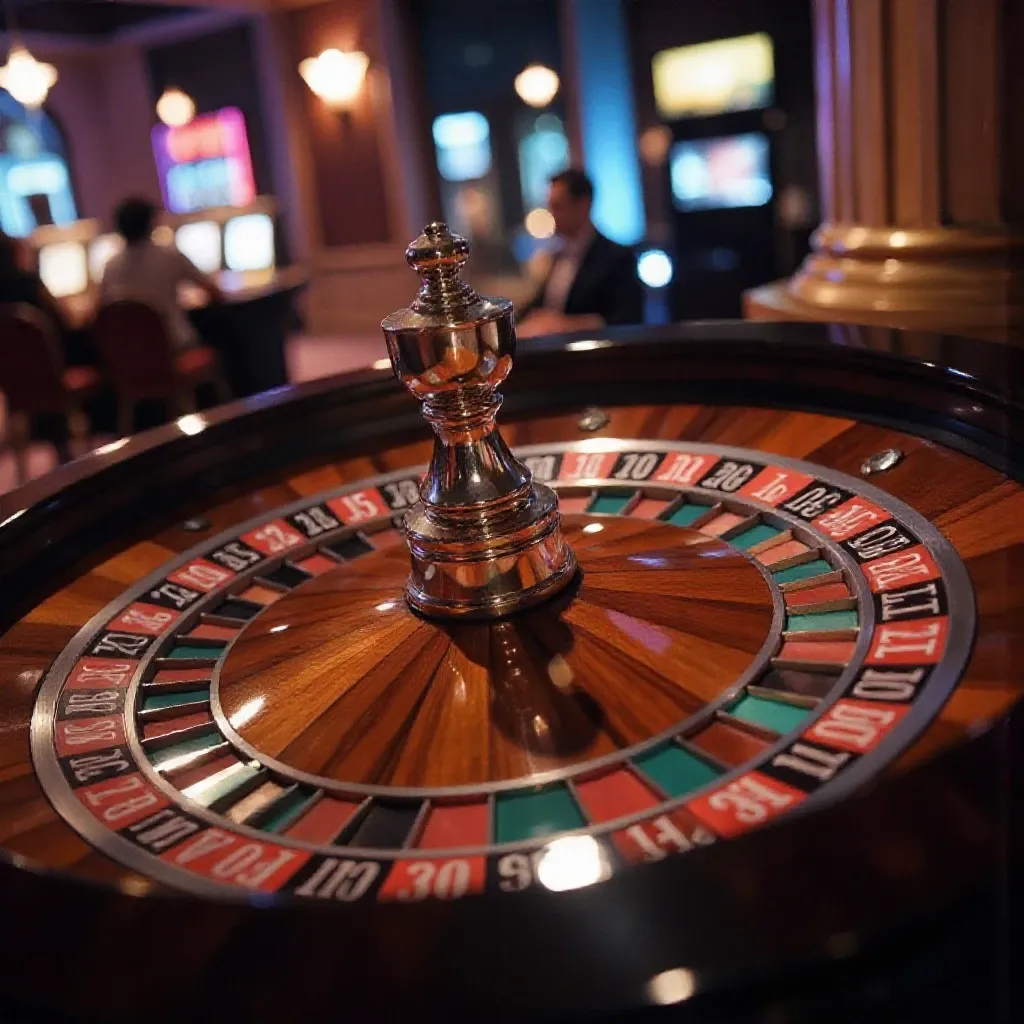
Ever felt that surge of adrenaline as you watch the roulette wheel spin, or maybe the quiet anticipation as lottery numbers are drawn? Games of chance hold a certain allure, a promise of instant gratification that can be incredibly tempting. We’ve all heard stories of lucky winners hitting the jackpot, fueling the dream of turning a small bet into a life-changing fortune. But behind the flashing lights and the celebratory fanfare lies a complex world of probabilities and risk.

This isn’t about raining on anyone’s parade or saying you shouldn’t ever buy a lottery ticket. It’s about equipping you with the knowledge to approach games of chance with your eyes wide open. Consider this an expert guide to understanding the odds, recognizing the risks, and ultimately, making informed decisions. We will explore key strategies for responsible gaming. Whether you’re a seasoned player or simply curious about what makes these games tick, consider this a resource for navigating the exciting, and sometimes perilous, landscape of games of chance.

The Allure of the Spin: Understanding the Psychology

Variable Rewards and Anticipation

Games of chance, especially those involving spinning reels or random number generators, are masters of variable rewards. This psychological tactic hinges on the principles of operant conditioning. Unlike consistent rewards, variable rewards are dispensed unpredictably, creating a powerful sense of anticipation. This is like waiting for the ball to land in a game of roulette. The uncertainty keeps players engaged, hoping the next spin will deliver the jackpot. This anticipation triggers the release of dopamine, a neurotransmitter associated with pleasure and motivation, further fueling the desire to keep playing. It is the main reason why it becomes obsessive.

The ‘Near Miss’ Effect

The ‘near miss’ effect is another potent psychological trick employed by games of chance. A near miss occurs when the outcome is close to a winning combination, but ultimately falls short. It is a psychological bias that makes people believe they were so close to the reward, so they play again. Interestingly, studies have shown that the brain reacts to a near miss in a similar way to an actual win, activating reward centers and reinforcing the urge to continue playing. This cognitive bias, coupled with loss aversion – the tendency to feel the pain of a loss more strongly than the pleasure of an equivalent gain – can lead individuals to overestimate their chances of winning and chase after those elusive near misses.

Responsible Engagement: Setting Limits and Protecting Your Funds

Responsible engagement in any activity, especially those involving chance, requires establishing clear boundaries to ensure a sustainable and enjoyable experience. This is particularly crucial when money is involved. By implementing practical strategies, individuals can safeguard their finances, manage their time effectively, and mitigate potential risks.

Setting a Financial Budget

Establishing a dedicated gambling budget is a fundamental step towards responsible engagement. A helpful framework for this is the 50/30/20 rule. This involves allocating 50% of your income to necessities, 30% to wants, and 20% to savings and debt repayment. Within the “wants” category, you can then determine a reasonable amount to allocate to recreational activities, including those involving chance. Diligently track your expenses to ensure you stay within the predetermined limits. Remember, this is not financial advice, but rather a practical approach to integrating entertainment expenses into your overall financial plan.

Time Management and Taking Breaks

Effective time management is just as critical as financial planning. When engaged in an activity that might be intense, individuals can easily lose track of time, leading to impulsivity and fatigue. Setting time limits and adhering to them is essential. Integrating short breaks can make a big difference. Stepping away for just five minutes to stretch, grab a glass of water, or simply focus on your breathing can do the trick. These breaks help combat cognitive fatigue, allowing you to return with renewed focus and make more rational decisions.

Beyond budgeting and time management, consider utilizing tools offered by many platforms. Deposit limits are one such feature, allowing you to restrict the amount of money you can deposit within a specific timeframe. Self-exclusion programs offer a more comprehensive solution, enabling you to voluntarily ban yourself from a particular platform or establishment. Proactive measures truly empower individuals to maintain better control to their actions.

Understanding the Odds: Chance vs. Skill

Many games walk a fine line between chance and skill, but understanding the underlying probabilities is crucial for responsible engagement. Whether it’s the spin of a roulette wheel or the draw of cards, randomness plays a significant role, often defying intuition. It’s easy to fall prey to misconceptions about winning streaks or lucky numbers, but recognizing these for what they are – statistical anomalies – is key to maintaining a realistic perspective. The world of gambling is built on probability, and while skill can influence certain games, chance almost always has the final say.

Probability dictates that over a large enough sample size, the actual outcomes will converge towards the expected outcomes. A simple coin flip, for example, has a 50/50 chance of landing on heads or tails. While a short sequence might show an uneven distribution (e.g., three heads in a row), many coin flips will even out, approaching that 50/50 split. The same is true of more complex games: each event is independent, unaffected by previous results.

The allure of overcoming the odds is powerful, and the entertainment value of games of chance is undeniable. However, players should be aware that the thrill comes from the inherent uncertainty, not the illusion of control. A sound understanding of probabilities can help everyone appreciate games responsibly, knowing that luck is a fickle mistress.

The House Edge Explained

The “house edge” represents the built-in advantage the game has over the player, expressed as a percentage. It is the difference between the true odds of winning and the payout odds offered by the house. Every game has a house edge, ensuring that the casino, or the “house”, statistically wins over the long run. Even seemingly small edges accumulate significantly over time. Savvy players recognize the house edge and factor it into their gaming decisions. This edge guarantees profit for the house.

Debunking Common Myths (Lucky Numbers, Hot Streaks)

The gambler’s fallacy is the mistaken belief that if something happens more frequently than normal during some period, it will happen less frequently in the future, or vice versa. This leads to chasing losses and thinking that a cold streak must inevitably turn hot. “Lucky numbers” are another common myth, often based on personal significance, but statistically meaningless. These concepts provide a comforting narrative in a random world, but they are cognitive biases with no basis in mathematical probability. Many have convinced themselves that a certain pattern will present a winning result despite the reality.

Balanced_Financial_Gaming

Recognizing the Risks: Addiction and Loss Chasing

Identifying Problematic Behavior

Compulsive gambling subtly tightens its grip, often masked as harmless fun. One might start noticing increased preoccupation with gambling, constantly thinking about past wins or planning future sessions. It can start with chasing bigger thrills, escalating bets to recapture the initial excitement. When the habit evolves into needing to gamble with increasing amounts of money to achieve the desired rush that’s when the psychology will need to be examined. This behavior transcends mere enjoyment; it becomes an escape, where individuals gamble to alleviate stress, anxiety, or other emotional distresses.

Breaking the Cycle of Loss Chasing

The allure of recovering losses can be incredibly strong, a behavioral pattern known as “loss chasing.” It’s driven by the desire to undo the pain of losing, creating a dangerous feedback loop. An essential initial step involves acknowledging the existence of a problem. Recognizing that gambling has become unmanageable and negatively impacts various aspects of life is crucial. Gamblers Anonymous offers support groups, providing a safe space to share experiences and learn coping strategies.

Beyond Luck: Strategies (Where They Apply)

Skill-Based Games vs. Pure Chance

Some games, like poker and blackjack, involve strategic decision-making. In poker, players analyze opponents, bluff, and manage their bankroll – skills that directly impact their probability of winning. Blackjack allows players to make informed decisions about hitting, standing, or splitting, based on the visible cards and blackjack odds. These elements distinguish them from pure chance games where outcomes are entirely random.

The Limits of Strategy

While strategy can improve a player’s odds in certain games, it’s crucial to acknowledge its limitations. The inherent unpredictability and cognitive bias influence even the most skilled players. No strategy can eliminate the house edge entirely. The readers should be aware that over extended play, the casino’s advantage tends to prevail, irrespective of a individuals applied skills. Skill can only improve the odds of each player.

Gambling strategies are the sets of actions that can be applied to improve the chances of winning, when gambling. Certain games, like poker and blackjack, can be influenced with gambling strategies. However, even in games that involve strategy, luck still plays a significant role. It is important to have a realistic understanding of gambling and avoid believing that one can consistently win through skill alone.

Conclusion: Play Smart, Stay Informed, and Enjoy the Game

Navigating the world of chance can feel like walking a tightrope, but with the right knowledge and a responsible mindset, it transforms into an enjoyable experience. The key is understanding the odds, recognizing the risks, and making informed decisions every step of the way. Remember, luck is a fickle friend, and relying solely on it is a recipe for disappointment.

Responsible gaming isn’t about eliminating the fun; it’s about enhancing it. It’s about setting limits, sticking to a budget, and viewing games of chance as entertainment, not as a financial strategy. It’s about recognizing when the thrill fades and knowing when to step away.

So, embrace the excitement, but always prioritize a balanced perspective. Stay informed, play smart, and most importantly, enjoy the game responsibly. When approached with awareness and caution, games of chance can be a source of fun and excitement, adding a little spice to life without compromising your well-being. Good luck, and may the odds be ever in your favor – responsibly, of course!